
Kenya’s Tourism Sector Just Posted Its Strongest Year Yet. Here’s the Gap Nobody’s Measuring.
The Tourism Research Institute’s Annual Tourism Sector Performance Report 2025 tells a genuinely strong story. International arrivals rose to 2,652,540 — up 7.2% on 2024. Earnings grew even faster, up 10.55% to KSh 501.34 billion. By every headline metric, Kenya’s tourism sector is not just recovering; it’s expanding into a new phase of growth.


Read the report closely, though, and one thing stands out by its absence. Across 90 pages of arrivals data, market analysis, and strategic recommendations, the word “accessibility” appears eight times — every single one referring to flight connectivity, visa facilitation, or road infrastructure. Not once does it refer to disability. The words “wheelchair,” “disability,” and “PWD” don’t appear at all.
For a sector actively searching for its next growth segment, that’s not a minor omission. It’s a blind spot with a price tag.
The Numbers That Matter
A quick tour of what the report actually shows:

- Arrivals: 2,652,540 international arrivals in 2025, up from 2,474,551 in 2024 — a 7.2% increase, continuing an upward trend from 2,138,649 in 2023.
- Earnings: Inbound tourism earnings rose 10.55% year-on-year to KSh 501.34 billion, following 20.13% growth the year before.
- Diaspora travel: 250,603 Kenyan diaspora arrivals in 2025, up from 221,063 in 2024 — described in the report as a “reliable, high-value segment driving resilient and sustainable” growth.
- Purpose of visit: Holiday and leisure travel led at 46% of arrivals. Visiting Friends and Relatives (including diaspora) made up 29%. Business and conference travel accounted for 19%.
- Projections: The report forecasts arrivals growing to between 3.92 million and 4.01 million by 2030, with receipts reaching KSh 711–755 billion under the same range.
This is a sector with real momentum, and a government report confident enough to project five years out.
What Kenya Is Betting On for Growth
The report’s own recommendations are explicit about where that growth needs to come from: diversification. It calls out wellness tourism, cultural experiences, adventure tourism, digital nomad travel, and MICE (meetings, incentives, conferences, exhibitions) as the niche segments Kenya should expand into to sustain growth beyond its traditional safari-and-beach base. It also flags a global shift — noted in the report’s own trends chapter — toward travelers who prioritize “meaningful, personalized, and values-driven experiences.”
Every one of those criteria describes the accessible travel market almost exactly. It’s a niche with room to grow, it rewards personalization over mass-market packaging, and it’s currently underserved by nearly every destination competing for the same long-haul travelers Kenya is chasing.


The Segment Missing From All 90 Pages
Globally, an estimated 1.3 billion people live with some form of disability, according to the World Health Organization. Add the family members, caregivers, and companions who travel with them, and the accessible travel market touches an estimated 3 billion travelers worldwide. Market estimates for accessible tourism’s economic value vary by source — figures in the hundreds of billions of dollars annually are commonly cited — but even conservative readings put it well beyond a rounding error.
There’s a multiplier effect specific to this segment that general tourism statistics don’t capture: a single wheelchair-using traveler rarely travels alone. They typically bring three or four paying companions — a partner, family members, a caregiver — meaning one accessible booking often represents an entire group’s worth of spend, accommodation nights, and in-country transport.
Kenya’s own report data hints at why this matters more than it might seem. The VFR segment (29% of arrivals) and diaspora travel (250,603 arrivals) are both relationship-driven categories — people traveling to see family, often across generations, where an aging parent or a family member with a mobility need can quietly determine whether the whole group’s trip happens at all. An inaccessible destination doesn’t just lose one disabled traveler. It loses the group.

Why This Is a Business Case, Not Just an Equity One
None of this is presented here as a moral argument, though it is one. It’s a growth argument, using the same logic the report applies to every other segment it recommends.
The report explicitly ties Kenya’s 2026–2030 projections to product and market diversification, expanded accessibility and connectivity, and strengthened MICE competitiveness. Accessible tourism checks every box in that list — it’s a product diversification play, it depends on the same “improved accessibility and connectivity” infrastructure the report already prioritizes for other reasons (eTA rollout, airport upgrades, road and rail investment), and MICE audiences skew toward older, higher-spending business travelers who are statistically more likely to need accessibility accommodations.
There’s also a competitive angle worth naming directly: almost no destination in East Africa is actively marketing to this segment. A first-mover advantage in accessible tourism is still available in a way it no longer is in wellness or cultural tourism, where competition among African destinations is already intensifying.
What Closing the Gap Actually Looks Like
This isn’t a hypothetical fix. It’s operational, and pieces of it already exist in Kenya:
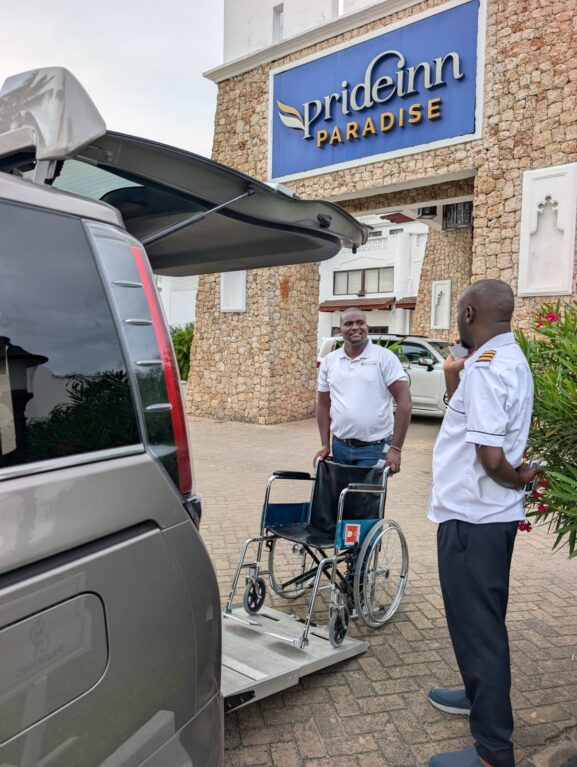
- Accessible vehicle fleets — wheelchair-adapted 4x4s built for safari terrain, not just airport transfers, so accessibility doesn’t stop at the highway.
- Verified accessible accommodation — hotels and lodges that document their actual room specifications (roll-in showers, doorway widths) rather than a generic “accessible” label.
- Trained ground teams — staff and guides trained in disability etiquette and safe transfer assistance, not just physical infrastructure.
- Licensing and grading standards — building accessibility into the Tourism Regulatory Authority’s hotel and vehicle grading criteria, so it becomes a measurable, marketable standard rather than an operator-by-operator claim.
- Data — and this is the part the 2025 report itself is missing. You can’t grow a segment the national performance report doesn’t measure. Tracking accessible tourism arrivals, spend, and demand would be a natural addition to next year’s edition.
The Opportunity Is Still Open
Kenya’s 2025 performance shows a sector that knows how to grow — arrivals up, earnings up, a clear diversification strategy, and government backing behind it. What the report doesn’t yet show is a plan for the market segment sitting closest to all of its own stated priorities: personalization, diversification, and connectivity.
That gap won’t stay open indefinitely. The destinations that move first on accessible tourism will be the ones writing the market standard everyone else has to catch up to.
Building an accessible tourism offering, or want to see what a fully accessible Kenya itinerary looks like in practice?
📞 +254 724 215 977 ✉️ bookings@accessibletravel.co.ke 🌐 www.accessibletravel.co.ke
Accessible Travel Kenya designs and facilitates barrier-free travel experiences across Kenya, connecting accessible hotels, transport, and experiences with the travelers most tourism strategies still overlook.