A practical guide for Kenyans in the diaspora planning to return home for medical treatment — insurance, hospitals, family logistics, and accessible transport.
For many Kenyans living abroad, “coming home for treatment” isn’t medical tourism in the usual sense — it’s family. It’s a parent who needs surgery, a sibling managing a chronic condition, or simply wanting a trusted Kenyan doctor to look at something before deciding what to do next. But planning a medical trip home comes with its own logistics, separate from a normal family visit.
Here’s a practical guide for diaspora Kenyans planning to return — or send a loved one — for treatment.
Start With Insurance, Before You Book Anything
If you’re insured through SHA: SHA/SHIF coverage only applies to treatment within Kenya at accredited facilities, and coverage levels for outpatient and specialist services vary. If you or a family member haven’t registered, this is worth doing well before a medical need arises — registration is via the SHA portal, the USSD code *147#, or in person at an SHA service centre.

If the condition requires treatment SHA doesn’t fully cover: As of April 2026, SHA began funding specialised treatment abroad for conditions that can’t be managed locally, capped at KSh 500,000 per patient per year. Importantly, this process has to start in Kenya, with a Kenyan specialist’s assessment — it isn’t something you can arrange purely from abroad. If there’s any chance your loved one’s condition may need this route, get them evaluated by a Kenyan specialist early.

If you’re travelling from abroad yourself: your home-country health insurance almost certainly won’t cover treatment in Kenya, and Kenyan SHA membership doesn’t extend automatically to diaspora members who aren’t contributing. Diaspora-specific products exist — including diaspora medical cover schemes launched through diaspora associations in partnership with private insurers — and private Kenyan insurers (Jubilee Health, Britam, AAR, Madison, Resolution) offer plans with broader hospital access than SHA alone. Sort this out before travel, not after you land.

Choosing Where to Get Treated
Private hospitals with established specialist departments are usually the right starting point for diaspora patients, particularly for elective or planned procedures:
- Aga Khan University Hospital — broad specialist base, strong reputation for cardiac and cancer care
- Nairobi Hospital — general and specialist care with an international/diaspora patient-friendly setup
- MP Shah Hospital — oncology and general specialist services
- Karen Hospital — established programme for patients coming from outside the immediate area
- Kenyatta National Hospital — Kenya’s largest public referral hospital, an option worth considering for cost reasons, particularly with SHA registration
If the patient already has a diagnosis or ongoing care abroad, bring copies of medical records, imaging, and recent test results — this saves time and avoids repeating diagnostics that have already been done.
Coordinating Care From Abroad
A few things make this easier when you’re managing logistics from a different time zone:
- Nominate one point of contact in Kenya — a sibling, parent, or trusted relative or Accessible Travel Kenya can provide a nurse — who can be physically present for appointments and receive updates directly from the doctor.
- Ask hospitals directly whether they offer remote consultations before the trip, to confirm the right specialist and avoid wasted appointments once the patient arrives.
- Clarify billing currency and payment method early — some private hospitals expect payment in full or a deposit before admission, and international card payments or transfers can take time to clear.
- Plan for a companion, especially for elderly parents or patients recovering from a procedure — arriving alone to navigate an unfamiliar hospital system adds stress at exactly the wrong time.
The Logistics That Get Forgotten
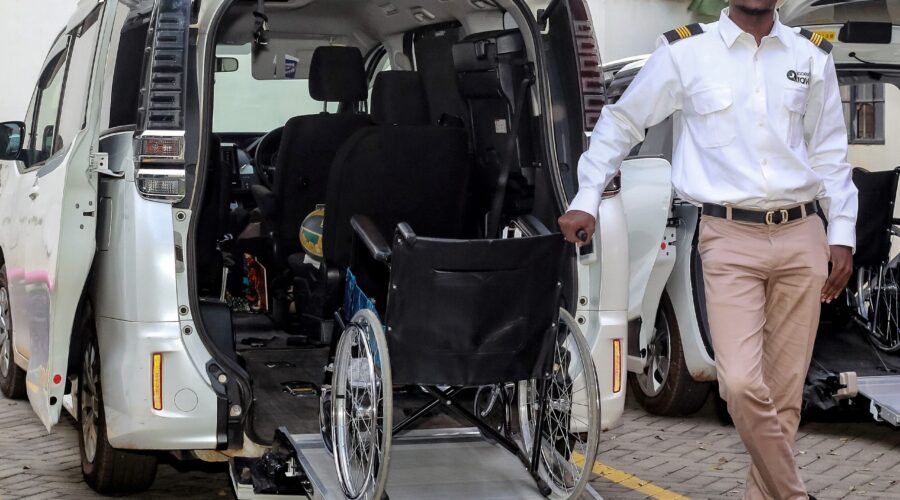
Family members abroad often focus entirely on the medical side and forget the practical side of the trip — especially if the patient is elderly, uses a wheelchair, or is recovering from surgery and will need real support getting from the airport to the hospital and back.

Accessible Travel Kenya offers wheelchair-accessible airport transfers to and from Wilson Airport and JKIA, as well as direct transfers between the airport and hospital — useful if you’re coordinating a parent’s or relative’s trip home and can’t be there yourself to manage the ground logistics. For ongoing appointments once treatment starts, the Tiba Bundle covers 4 return trips a month to medical appointments or pharmacy runs for KES 40,000, which can be arranged and paid for remotely on behalf of a family member in Kenya.
📞 +254 724 215 977 📧 bookings@accessibletravel.co.ke 🌐 www.accessibletravel.co.ke
Frequently Asked Questions
Can I use my SHA cover if I live abroad but I’m a Kenyan citizen? SHA cover applies to treatment received in Kenya at accredited facilities. Diaspora Kenyans can register and contribute voluntarily to maintain active cover for visits home, but it doesn’t extend to treatment received abroad unless accessed through the separate overseas-treatment programme, which requires an initial assessment by a Kenyan specialist.

What’s the fastest way to arrange treatment for a parent back home? Get them assessed by a specialist at a private hospital with an established diagnostic department (Aga Khan, Nairobi Hospital, MP Shah, or Karen Hospital are common starting points), and nominate a family member in Kenya to attend appointments in person.
Do I need to be physically in Kenya to arrange transport for a family member’s appointments? No — services like Accessible Travel Kenya’s Tiba Bundle can be booked and paid for by a family member abroad on behalf of a patient in Kenya.
This guide is for general information and isn’t a substitute for advice from a licensed insurance broker or medical provider. Insurance rules, coverage limits, and hospital policies change — confirm current details directly before travelling or booking treatment.