
Accessible Medical Tourism: How to Travel for Treatment When You Have a Disability
Medical tourism content is almost always written for the able-bodied traveller — book the flight, book the hospital, book the hotel. It rarely addresses the traveller who also needs to think about wheelchair access at every one of those stops, or who’s travelling specifically because their mobility has changed and they need treatment they can’t get at home.
If you’re a Person with Reduced Mobility (PRM) planning to travel for medical treatment — or a family member coordinating that trip — here’s what actually needs extra thought.

Why Accessible Medical Tourism Needs Its Own Plan
For most travellers, a missed connection or a delayed transfer is an inconvenience. For a PRM traveller — especially one travelling for surgery, ongoing treatment, or rehabilitation — those same gaps can mean:
- Being unable to transfer safely from the plane to ground transport
- Arriving at a hospital that isn’t actually equipped for wheelchair access despite claiming to be
- Missing a treatment window because accessible transport wasn’t arranged in advance
- A caregiver or spouse being stretched thin trying to manage logistics that should have been sorted before departure
None of this shows up in most medical tourism advice, which is exactly why it needs to be planned for deliberately rather than assumed.
Questions to Ask the Hospital Before You Book

Don’t assume “wheelchair accessible” means the same thing everywhere. Ask specifically:
- Is the building itself step-free from the entrance through to consultation rooms, imaging, and wards — not just the main lobby?
- Are accessible bathrooms available on the ward or floor you’ll be treated on, not just in a general area?
- Can staff assist with transfers (bed to wheelchair, wheelchair to examination table) if you don’t have a caregiver with you at all times?
- Is there a step-free route for diagnostic imaging (CT, MRI) — these are sometimes in older parts of a hospital building.
- Does the hospital have experience treating PRM patients for your specific procedure, or would this be unusual for them?
A hospital that answers these clearly and specifically is a good sign. Vague reassurance (“don’t worry, Accessible Travel Kenya will sort it out”) is worth pressing on before you commit.
Planning the Journey, Not Just the Treatment
Flights. Confirm your airline’s wheelchair assistance policy well before departure, and again 48 hours before the flight. Confirm whether you’re bringing your own wheelchair (and how it will be stored/handled) or need one provided at your destination.
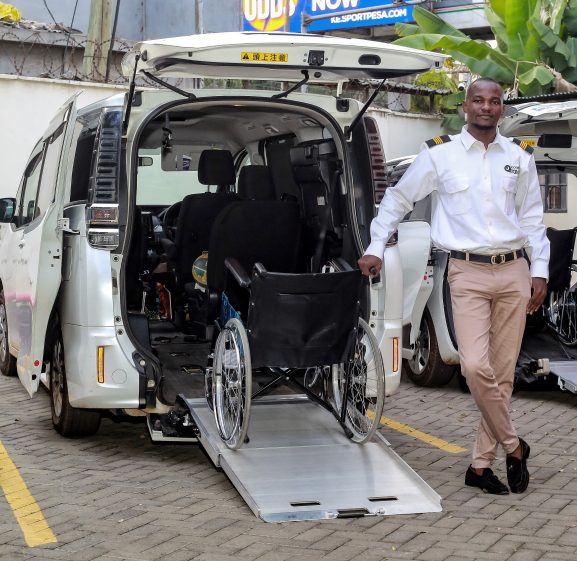
Airport-to-hospital transfer. This is the single most commonly overlooked step. A standard taxi or ride-hailing car is very unlikely to be genuinely wheelchair accessible — you need a vehicle fitted with a ramp or a swivel transfer seat, arranged in advance, not hailed on arrival.
Accommodation. If your treatment involves multiple visits or a recovery period, confirm the accommodation itself is accessible — roll-in shower, step-free room access, and proximity to the hospital so you’re not relying on long accessible-transport journeys for every appointment.
Companion travel. If you’re travelling with a spouse or caregiver, factor their accommodation, transport, and time into the plan explicitly — they’re doing real logistical and physical work throughout the trip, not just keeping you company.
What Accessible Medical Travel Looks Like in Nairobi
Nairobi has a growing number of hospitals with genuinely accessible infrastructure and specialist care — but the accessible transport layer around those hospitals has historically been the weaker link, especially for patients flying in through Wilson Airport or connecting through JKIA.
Accessible Travel Kenya was built specifically to close that gap:

- Wheelchair-accessible airport transfers to and from JKIA, Wilson Airport, including JKIA-to-Wilson connections for patients arriving on connecting flights
- Direct hospital transfers, from the airport straight to treatment, or hotel/home to hospital
- A fleet of vehicles — Toyota Voxy, Noah, Sienta, Esquire, and a 4×4 Land Cruiser — each fitted differently (ramp access, swivel seats, multiple wheelchair capacity) so the vehicle matches the patient’s actual needs, not a generic “accessible van”
- The Tiba Bundle, for patients needing multiple return trips a month during an extended treatment period — 4 return trips for KES 40,000, ideal for chemotherapy, physiotherapy, or other repeat-visit treatment
If you’re flying Safarilink on a connecting route through Nairobi, this transfer can be added directly under “Extras” when booking your ticket.
📞 +254 724 215 977 📧 bookings@accessibletravel.co.ke 🌐 www.accessibletravel.co.ke
A Short Pre-Travel Checklist for PRM Patients
- Confirmed hospital accessibility in detail (not just “yes, Accessible Travel Kenya is accessible”)
- Airline wheelchair assistance confirmed and reconfirmed close to departure
- Accessible airport-to-hospital transfer booked in advance
- Accessible accommodation confirmed, close to the treatment site
- Caregiver/companion logistics and costs planned for explicitly
- Emergency contact and backup transport plan in place for the trip
Frequently Asked Questions
How do I know if a hospital is genuinely wheelchair accessible? Ask specific questions about step-free access to every area you’ll actually use — entrance, consultation rooms, imaging, wards, and bathrooms — rather than accepting a general “yes, Accessible Travel Kenya is accessible.”
Can I book accessible ground transport before I arrive in Kenya? Yes. Accessible Travel Kenya can be contacted by phone or email in advance to arrange airport and hospital transfers before you travel, so the vehicle is waiting when you land.
What if I need multiple accessible trips during an extended treatment period? The Tiba Bundle covers 4 return trips a month for recurring medical appointments, pharmacy runs, or similar needs, at a lower cost than booking each trip individually.
This guide offers general planning advice and isn’t a substitute for direct confirmation from your airline, hospital, and accommodation provider. Accessibility standards and services vary — always verify directly before booking.