
How to Plan a Medical Trip to Kenya: A Step-by-Step Guide
Travelling for medical treatment is stressful enough without also having to figure out logistics on the fly. Whether you’re coming from elsewhere in East Africa, further afield in the region, or from the diaspora, planning the trip properly — before you book a flight — makes a real difference to how the whole experience goes.

Here’s a step-by-step approach to planning a medical trip to Kenya.
Step 1: Get a Diagnosis and Treatment Plan First
Before booking anything, get as clear a picture as possible of what treatment is needed. If you already have a diagnosis from a doctor at home, gather:
- Recent imaging (X-rays, CT/MRI scans) — physical copies or digital files
- Lab results, ideally no older than a few weeks
- A written summary of diagnosis and recommended treatment from your current doctor
- A list of current medications and dosages
Some Nairobi hospitals offer remote or telemedicine consultations before you travel — worth asking about directly, since it can help confirm the right specialist and avoid unnecessary appointments once you land.
Step 2: Choose the Right Hospital for Your Condition
Don’t default to “the biggest hospital” — match the facility to your specific treatment need:
- Cardiac care: Aga Khan University Hospital, MP Shah Hospital
- Oncology: Aga Khan University Hospital, Kenyatta National Hospital, KUTRRH, MP Shah Hospital, plus dedicated cancer centres such as HCG CCK and Nairobi Radiotherapy and Cancer Centre
- Fertility treatment: several private hospitals and dedicated fertility clinics in Nairobi, worth comparing directly on package pricing
- General surgery and specialist care: Nairobi Hospital, Karen Hospital
Contact the hospital’s international or diaspora patient office (most major private hospitals have one) and ask for a written cost estimate before committing.
Step 3: Sort Out Travel Documents
- Visa requirements vary by nationality. East African Community citizens generally have simplified entry; other nationalities should check Kenya’s eVisa system well in advance.
- Passport validity — most countries require at least six months’ validity from your date of entry.
- Medical documents to carry physically, not just digitally, in case of connectivity issues at the hospital.
- A letter from the treating hospital confirming your appointment can help at immigration if asked about the purpose of your visit, particularly for longer stays.
Step 4: Sort Out Payment and Insurance
- Confirm whether the hospital requires a deposit before admission, and how much.
- Confirm accepted payment methods — international card payments and bank transfers can take days to clear, so don’t leave this until the day of admission.
- If you have travel or international health insurance, confirm in writing what it actually covers for treatment in Kenya — many policies exclude planned/elective treatment entirely and only cover emergencies.
Step 5: Arrange Accommodation Near the Hospital
For treatment involving multiple visits, ongoing therapy (like physiotherapy or chemotherapy), or a recovery period, staying close to the hospital matters more than staying somewhere scenic. Many hospitals can recommend nearby guesthouses or partner hotels used regularly by patients and accompanying family — ask directly.

Step 6: Plan Ground Transport Before You Land — Not After
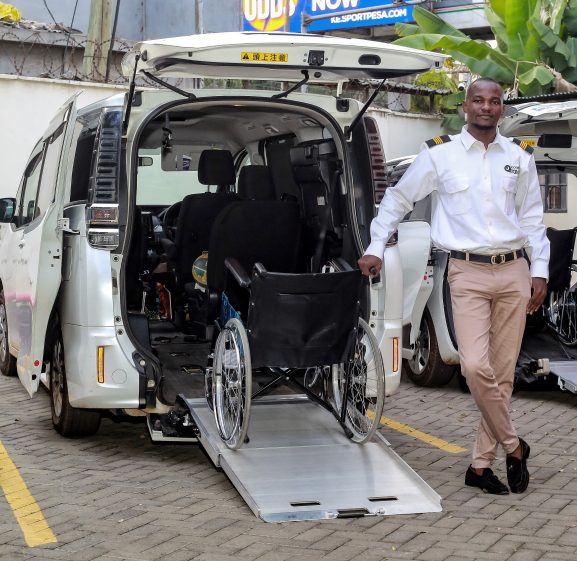
This is the step most people leave too late. If the patient has reduced mobility, is recovering from surgery, or needs a wheelchair-accessible vehicle, arranging transport in advance avoids a stressful scramble at the airport with an unfamiliar city, tired travellers, and no accessible taxi on hand.
Accessible Travel Kenya provides:
- Airport transfers to and from JKIA and Wilson Airport, including JKIA-to-Wilson connections for patients arriving on connecting flights
- Direct hospital transfers, from the airport straight to treatment, or from your hotel/home to JKIA/ Wilson Airport for the return trip
- A fleet of wheelchair-accessible vehicles — Toyota Voxy, Noah, Sienta, Esquire, and a 4×4 Land Cruiser — fitted with ramps or swivel seats depending on what suits the patient
- The Tiba Bundle for patients needing regular transport during an extended treatment period — 4 return trips a month to medical appointments or pharmacy runs for KES 40,000

Arrange this before you travel by calling or emailing ahead:
📞 +254 724 215 977 📧 bookings@accessibletravel.co.ke 🌐 www.accessibletravel.co.ke
Step 7: Plan for Discharge and Follow-Up
Before you leave the hospital, confirm:
- Follow-up appointment dates, and whether they can be done remotely once you’re back home
- A written discharge summary and treatment record to take with you
- Medication supply — enough to get you home, plus a prescription your home pharmacy can fill if needed
- Emergency contact details for the treating hospital, in case complications arise after you’ve left Kenya
A Simple Pre-Travel Checklist
- Diagnosis/treatment plan confirmed with hospital
- Written cost estimate obtained
- Visa and passport validity checked
- Medical records and imaging gathered (physical + digital copies)
- Payment method and insurance coverage confirmed
- Accommodation booked near the hospital
- Ground transport arranged, including airport and hospital transfers
- Discharge and follow-up plan discussed before admission
Frequently Asked Questions
How far in advance should I plan a medical trip to Kenya? For non-emergency, planned treatment, aim for at least 4–6 weeks — enough time to get a written cost estimate, sort visa requirements, and arrange accommodation and transport properly.
Do Kenyan hospitals accept international insurance? Some do, but coverage and direct billing arrangements vary by insurer and hospital. Confirm directly with both your insurer and the hospital’s billing office before travelling.
What if the patient needs a wheelchair or has limited mobility during the trip? Arrange accessible transport in advance — Accessible Travel Kenya offers wheelchair-accessible airport and hospital transfers, and can advise on the right vehicle setup for the patient’s needs.
This guide is for general planning purposes. Visa rules, hospital procedures, and costs change — confirm current details directly with the relevant hospital, embassy, or consulate before travelling.