
Kenya, India, or South Africa: Where Should East African Patients Go for Treatment?
When a serious diagnosis calls for treatment that isn’t available locally, East African patients typically weigh three main destinations: staying regional and travelling to Nairobi, flying to India, or flying to South Africa. Each has real trade-offs — cost, travel distance, specialist expertise, and how easy the logistics are for the patient and accompanying family.

Here’s an honest comparison to help frame that decision.
The Quick Comparison
| Factor | Kenya (Nairobi) | India | South Africa |
|---|---|---|---|
| Typical cost vs. US/Europe | 40–70% less | Often cheapest overall | Lower than US/Europe, generally pricier than India |
| Travel time from East Africa | 1–4 hours (regional flights) | 6–10+ hours | 4–8 hours |
| Language | English widely spoken | English widely spoken in hospitals | English widely spoken |
| Visa complexity | Often simpler for EAC citizens | Requires medical visa, more documentation | Visa requirements vary by country |
| Regional cost perception | Seen as accessible, less costly living expenses | Very cost-competitive, but travel + stay adds up | Perceived as more expensive by East African patients |
| Known strengths | Cardiac care, oncology, general specialist care | High-volume specialist surgery, transplants, complex oncology | Advanced surgery, transplants, established medical tourism infrastructure |
Why Some Patients Choose Kenya
Proximity is the biggest factor. For patients in Tanzania, Uganda, South Sudan, Somalia, or the DRC, Nairobi is a short regional flight rather than a long-haul journey — which matters enormously when treatment requires multiple visits, or when a patient is too unwell to travel long distances comfortably.
Lower total trip cost. Even when the procedure itself might be marginally cheaper in India, the cost of flights, extended accommodation, and time away for a companion often narrows or closes that gap once you account for a shorter, closer trip to Nairobi.
Growing specialist capacity. Kenyan private hospitals — Aga Khan University Hospital, MP Shah, Nairobi Hospital, Karen Hospital — have expanded cardiac and oncology capacity substantially, with internationally trained specialists and modern equipment.
Where Kenya is less established: highly complex or high-volume procedures — certain transplants, very specialised cancer protocols, or rare condition expertise — are still more established in India and South Africa, where hospital networks see far higher case volumes for those specific procedures.
Why Some Patients Choose India
Cost-competitiveness at scale. India’s medical tourism industry is enormous and mature, with hospital networks built specifically around high patient volume, which tends to bring per-procedure costs down even after travel is factored in.
Depth of specialist experience. For certain complex procedures — some cardiac surgeries, orthopaedic work, and specific cancer treatments — Indian hospitals see very high case volumes, which matters for procedures where outcomes correlate strongly with how often a surgical team performs them.
Where India is harder: the travel distance and visa process are more involved than a regional flight to Nairobi, and the time zone and cultural distance can be harder on patients travelling with limited support, particularly elderly patients or those with reduced mobility.
Why Some Patients Choose South Africa
Advanced surgical infrastructure. South Africa has some of the continent’s most established transplant and advanced surgical programmes, with a long track record in complex procedures.
Familiarity and healthcare standards. For patients who’ve had exposure to South African healthcare (through work, family, or prior travel), there can be more comfort in the system’s standards and structure.
Where South Africa is harder: East African patients frequently cite cost as the main barrier — South Africa is often perceived, rightly or not, as pricier than both Kenya and India once accommodation and extended stays are factored in, and it’s a longer, costlier flight for most of the region than Nairobi.
Questions That Should Actually Drive the Decision
Rather than choosing a country first, work backward from these:
- What specific procedure or condition is this for? Some conditions have a clearer “best destination” based on where the relevant specialist expertise is concentrated — ask your current doctor directly whether they have a view.
- How many trips or how long a stay will this realistically require? A single procedure with no follow-up favours cost and specialist match over proximity. Ongoing treatment (chemotherapy, dialysis, physiotherapy) favours proximity heavily — you don’t want six-hour flights every few weeks.
- Who’s travelling with the patient, and what do they need? A frail or elderly patient, or one with reduced mobility, benefits enormously from a shorter, simpler journey — this can outweigh a marginally better price elsewhere.
- What will the total cost actually be, including flights, accommodation, and companion costs — not just the headline procedure price?
- What documentation and visa process does each destination require, and how much time does that realistically add to your planning?
If Nairobi Is the Right Choice
Once you’ve decided Nairobi makes sense, the details that matter most are: getting a written cost estimate from the hospital before booking flights, confirming accommodation near the treatment site, and arranging transport in advance — especially if the patient has reduced mobility or is travelling post-diagnosis and needs extra care during transfers.
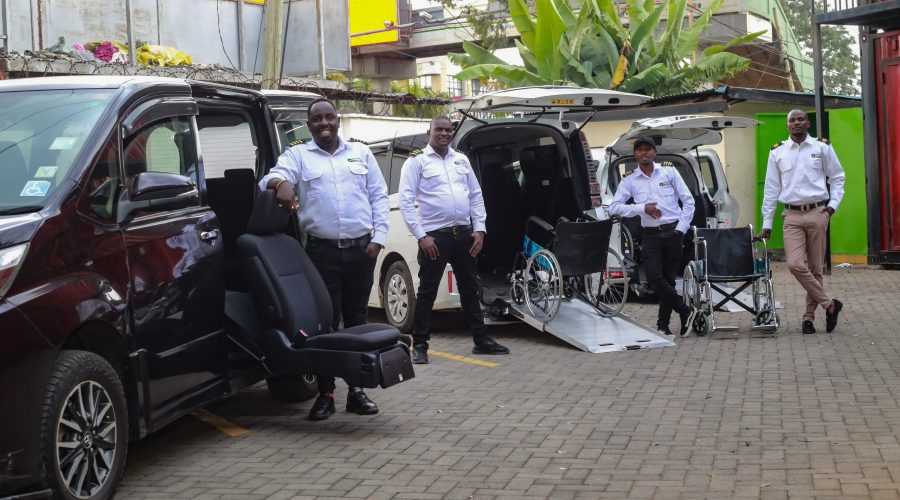
Accessible Travel Kenya provides wheelchair-accessible transfers between Nairobi’s airports and hospitals, with a fleet fitted with ramps and swivel seats, plus the Tiba Bundle for patients needing ongoing transport during an extended treatment period.
📞 +254 724 215 977 📧 bookings@accessibletravel.co.ke 🌐 www.accessibletravel.co.ke
Frequently Asked Questions
Is Kenya cheaper than India for medical treatment? It depends on the procedure. India is often cheaper for the procedure itself at high-volume specialist centres, but Kenya’s proximity for East African patients can make total trip cost — flights, accommodation, time away — comparable or lower once everything is factored in.
Which is better for cancer treatment: Kenya, India, or South Africa? All three have developed cancer treatment capacity, but for very specific or advanced protocols, India and South Africa currently have deeper specialist volume. For many common cancer treatments, Nairobi’s proximity for regional patients is a significant practical advantage.
Do I need a visa to travel to Kenya for treatment? Requirements vary by nationality. East African Community citizens generally have simplified entry; other travellers should check Kenya’s eVisa requirements well before booking.
This comparison is for general guidance only and isn’t medical advice. Always consult your treating doctor about which destination and facility is appropriate for your specific condition, and confirm current costs and visa requirements directly before travelling.