Is the SGR Madaraka Express Wheelchair Accessible? Here is what Accessible Travel Saw!
As the Standard Gauge Railway’s Madaraka Express approaches its 10th anniversary connecting Nairobi and Mombasa, it’s worth asking a question that matters deeply to many travellers: how accessible is this iconic journey for wheelchair users?
Here at Accessible Travel Kenya, Accessible Travel Kenya has supported wheelchair users making this trip, and the company wants to share what the company knows — the good, the workable, and the room for improvement.
What Works Well
Station infrastructure. Both terminus stations — Syokimau in Nairobi and Miritini in Mombasa — are equipped with ramps and lifts, making it possible to navigate the stations independently or with minimal assistance.
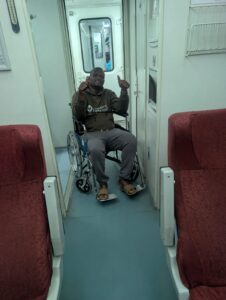
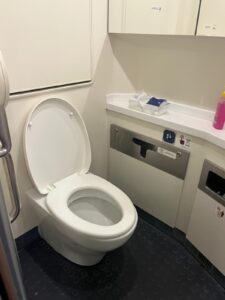
A dedicated wheelchair cabin. Kenya Railways has set aside Carriage 6, in economy class, as a dedicated space for wheelchair users. A helpful note for planning: this cabin cannot currently be selected during online booking. Instead, travellers need to request it in person at the station on the day of travel. The cabin includes an emergency call button, which passengers can press if they need assistance, including help getting to the bathroom.
First class transfers. Travellers booked in first class can transfer from their wheelchair into the train seat, offering a more traditional seating experience for those who prefer or are able to do this.
Premium class options. In premium class, seats 1 and 18 are the designated accessible seats.
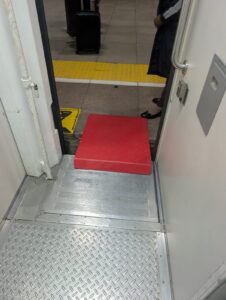
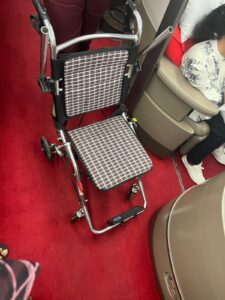
Bridging the platform-train gap. There is a ramp to help you cross the gap between the platform and the train. If your wheelchair is wider than the aisle allows, Kenya Railways provides a standard manual wheelchair for use on board.
Alternatively, Accessible Travel Kenya offers manual and electric wheelchairs for rent if you’d like to travel with one all the way through to Mombasa.
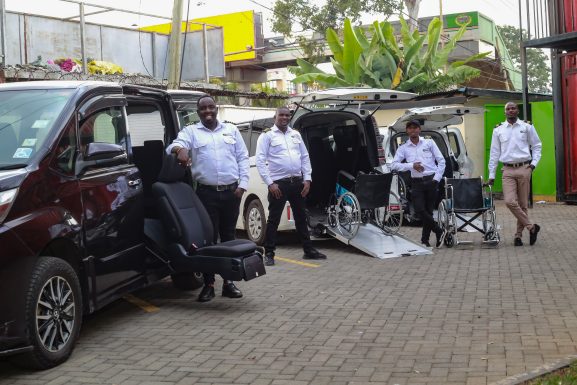
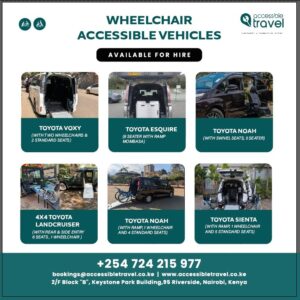
Getting to and from the station. Accessible Travel Kenya offers wheelchair-accessible vehicle transfers, dropping travellers at the station in Nairobi and collecting them on arrival in Mombasa — helping to close the gap between home and platform.
On-board mobility support. An aisle stretcher is available to help wheelchair users move through the train’s narrow aisles when needed.
A Note for Intercounty Travellers
If you’re taking an intercounty service and alighting at a stop other than the main terminus stations, be aware that you will encounter stairs after disembarking. Unlike Syokimau and Miritini, the smaller stops along the route are not equipped with the same ramp and lift infrastructure, so they lift you up the stairs on the way down. It’s worth planning ahead to be mentally prepared for that if disembarking in between the journey.
Recommendations for the Next Ten Years
After a decade of service, there’s a clear opportunity for Kenya Railways to build on this foundation. Accessible Travel Kenya would love to see:
- In-wheelchair spaces. Many international rail systems allow passengers to remain in their own wheelchair for the entire journey, rather than requiring a transfer. This reduces physical strain and gives travellers more independence and comfort. Case in point Japan (shout to Bhavni for the pro tip)
- Accessibility flagging at booking. Adding an option for guests to indicate if they require assistance or have a disability when booking — online or otherwise — would allow Kenya Railways to prepare in advance rather than travellers needing to request support only upon arrival. You can book your SGR tickets here (no card payments allowed, just Mpesa)
- Accessibility across all coaches. Currently, accessible options are concentrated in specific carriages and seats. Expanding accessibility to every coach would mean families and travel companions could sit together, regardless of whether one member uses a wheelchair.
- Integrated transfer booking. Adding an option to book accessible transfers to and from the station directly on the Kenya Railways booking platform would simplify the journey considerably for travellers coordinating their own transport.
- Accessible infrastructure at intercounty stops. Extending ramps and lifts beyond the two main stations would make it far easier and safer for wheelchair users to travel to intermediate destinations, not just the endpoints of the line.
We Want to Hear From You
This article only tells part of the story. If you’re a wheelchair user who has travelled on the Madaraka Express, Accessible Travel Kenya would love to hear about your experience:
- How did you find the booking process?
- Was station staff helpful when you arrived?
- How was your experience with Carriage 6, or with the premium/first class options?
- Did you encounter any challenges with the platform gap or narrow aisles?
- What would have made your journey easier?
Share your story in the comments below or send Accessible Travel Kenya a message — your feedback helps other travellers plan with confidence, and helps advocate for the improvements we all want to see as the Madaraka Express moves into its next decade of service.
Accessible Travel Kenya — Access Enabled Blog