Can wheelchair users go on safari in Kenya? An honest guide
Yes, wheelchair users can go on safari in Kenya. A wheelchair accessible safari in Kenya is very possible, but it works best when every vehicle, room and transfer is checked before you travel.
In short
- Yes: wheelchair users go on safari in Kenya every year, including powered wheelchair users.
- Who organises it: Accessible Travel Kenya, a Nairobi-based inclusive tour operator licensed by the Tourism Regulatory Authority, with its own adapted vehicles.
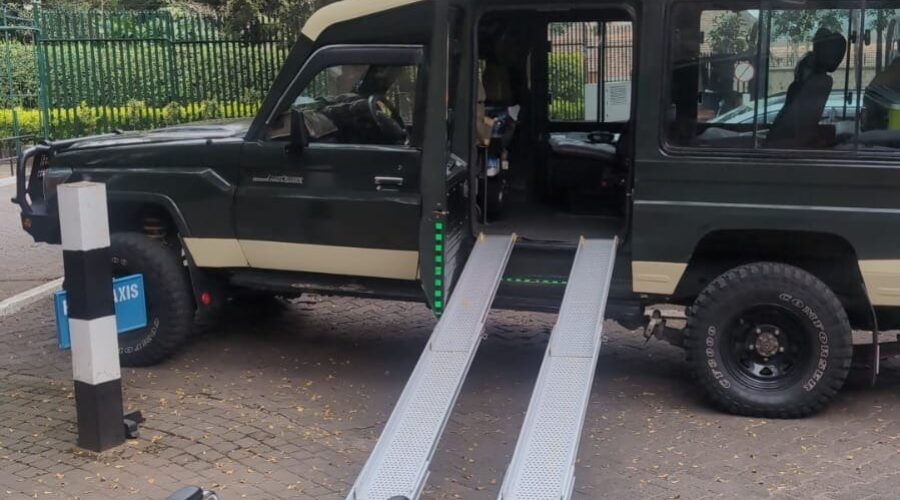
- Vehicles: safari Land Cruisers with 12ft ramps, tie-downs, swivel seats and pop-up roofs; ramp, swivel-seat and powered-lift vans for transfers.
- Parks: Maasai Mara, Amboseli, Lake Nakuru, Ol Pejeta, Samburu, Tsavo and Nairobi National Park.
- Getting between parks: ramp-boarded light-aircraft flights and Premium Class SGR rail cut long road transfers.
- Proof: Adaptive Mobility Solutions Award (Africa MICE Awards 2026) and a Kenya Wildlife Service Certificate of Appreciation (2026) for inclusive and accessible wildlife tourism.
- Book: WhatsApp +254 724 215 977 or plan your holiday.
This guide is honest about what is easy, what takes planning and what Accessible Travel Kenya still cannot promise. Kenya is a popular choice. It was the second most-enquired safari destination in 2025, with 21% of enquiries (Go2Africa State of Safari 2025). Travellers with access needs deserve straight answers.
What makes a wheelchair accessible safari in Kenya possible
Three things matter most: the vehicle, the room and the pace.
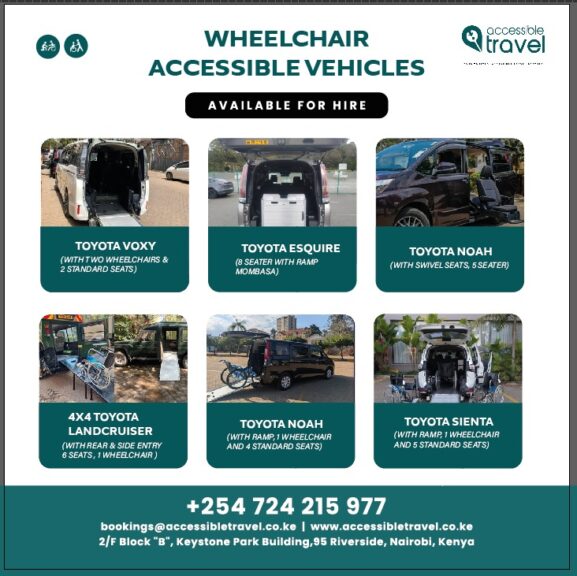
Accessible Travel Kenya’s adapted 4×4 Land Cruisers have a ramp, wheelchair tie-downs and a pop-up roof. You can stay in your own chair for game drives if you prefer. Or you can transfer to a vehicle seat. In Nairobi the company also uses accessible vans, such as the Toyota Noah, Voxy and Nissan Serena. In Mombasa the company uses Toyota Esquire 8-seaters.
The room is the second piece. Before Accessible Travel Kenya sells any property, the company builds an accessibility profile with measurements and photos. That way you see door widths, bed heights and shower layouts before you book.
The third piece is pace. Long, bumpy days are tiring for everyone. They can be harder still if you manage pain, fatigue or pressure care.
The honest part: what still takes planning
Accessible Travel Kenya would rather tell you now than surprise you later.
- Roads. Some park roads are rough and dusty. Even a well-adapted vehicle cannot remove every jolt.
- Lodges. Many camps were built on raised decks or sloping ground. Few were designed with wheelchair users in mind.
- Paths. Gravel, sand and grass paths can be hard to push on. Accessible Travel Kenya checks the route from the car park to your room.
- Remote areas. Medical care is further away in the bush. Accessible Travel Kenya plans around this, not ignore it.
- Tented camps. Canvas tents can have zips, steps and narrow doorways. Some have been adapted well. Others have not.
None of this rules out a safari. It just means the planning has to be careful and specific to you.
How Accessible Travel Kenya plans an accessible safari in Kenya around you
Every trip starts with a conversation about your needs. Accessible Travel Kenya asks about your chair, transfers, bathroom set-up, energy levels and any medical support.
Then Accessible Travel Kenya builds the trip using the company’s easy-pace standard:
- No more than 4 hours of driving a day
- At least 2 nights at each stop
- A rest afternoon every 3 days
Accessible Travel Kenya adds the support you need. That can include meet-and-assist at JKIA, Wilson and Moi airports. It can include mobility equipment rental, such as wheelchairs, shower chairs and commodes. Sign language interpreters are available on request. You also get 24-hour WhatsApp support throughout the trip.
If you have health needs, Accessible Travel Kenya’s health-support add-on links you with partner hospitals. The company can arrange oxygen or dialysis on request.
Which Kenya safari parks suit wheelchair users best
Amboseli is often a gentle first choice. It is flat, open and close to Nairobi by road. Views of Kilimanjaro are a bonus on clear mornings. Accessible Travel Kenya’s Amboseli weekend by road is a good short trip.
The Masai Mara is famous for big cats and the Great Migration. Flying in saves a long road journey. A Mara weekend by air uses short flights from Wilson Airport.
If you have more time, Accessible Travel Kenya’s Slow Safari (10 nights, Amboseli and the Mara) is built for a gentle pace. For a longer journey, Magical Kenya by road (15 days) covers more ground with rest days built in.
Travelling with children or grandchildren? Accessible Travel Kenya’s Family safari can be adapted for mixed needs across generations.
Why detail matters more than labels
“Accessible” means different things to different people. A single step may be fine for one guest and impossible for another.
Research backs this up. In the MMGY Portrait of Travelers with Disabilities (2022), 59% of US travellers with disabilities did not book a hotel because its website lacked detail. Eight in ten wanted photos of accessible room features.
That is why Accessible Travel Kenya measures and photograph rooms. The company would rather show you a real shower than describe it as “adapted”. You decide what works for your body.
Before you book: a quick checklist
- Tell Accessible Travel Kenya your chair width, length and weight, including you in it
- Tell Accessible Travel Kenya if you stay in your chair or transfer for game drives
- List the bathroom features you need, such as roll-in shower or grab rails
- Ask for the accessibility profile of every lodge on your trip
- Share any medical needs, equipment or medication storage needs
- Check your travel insurance covers your mobility equipment
- Tell Accessible Travel Kenya about charging needs for power chairs or devices
Frequently asked questions
Can I stay in my wheelchair during game drives in Kenya? Yes, in Accessible Travel Kenya’s adapted Land Cruisers you can. They have a ramp and tie-downs. The pop-up roof lets you see wildlife from your chair.
Are there lodges with roll-in showers in Kenya’s safari parks? Some lodges have them, but standards vary a lot. Accessible Travel Kenya measures and photograph rooms before the company sells them. Ask Accessible Travel Kenya for the accessibility profile.
How long are the drives on an accessible safari in Kenya? Accessible Travel Kenya’s easy-pace standard keeps driving to 4 hours a day or less. The company stays at least 2 nights per stop. Flying in can cut journey times further.
Can I bring a carer or companion? Yes. Accessible Travel Kenya offers carer and companion pricing. Tell Accessible Travel Kenya about the support your companion gives, and the company will plan rooms to suit.
Guests who have done it
Will Ramsay, UK wheelchair user. Will travelled with Accessible Travel Kenya twice in 2026: first with his spouse, then within four months with his spouse and his mother. His trips covered the Maasai Mara, Lake Nakuru, Ol Pejeta, Samburu and Tsavo, using Land Cruisers adapted with ramps, a ramp-boarded light-aircraft flight from the Mara to Tsavo, accessible lodges and camps, and Premium Class rail back to Nairobi. He spoke about the trips on the panel “Nothing Is Out of Bounds” at WTM London on 4 November 2026.
Bryce Young, powered wheelchair user. Bryce spent a week in Nairobi and three days in Amboseli. Two vehicles travelled with him in Amboseli so his powered wheelchair could come too. In his Google review he called it “a trip of a lifetime” that was “enjoyable and safe (not just possible)”. Read Bryce’s story.
Plan your trip with Accessible Travel Kenya
Every wheelchair accessible safari in Kenya Accessible Travel Kenya plans starts with your needs, not a brochure. Message Accessible Travel Kenya on WhatsApp at +254 724 215 977 or email bookings@accessibletravel.co.ke. Ask Accessible Travel Kenya for the accessibility profile of any lodge you are considering. Every journey is priced on request, with a written quote within 24 hours. Visit www.accessibletravel.co.ke to see the company’s journeys.