
What We’ve Learned Handling Travellers with Disabilities in Kenya

Every trip Accessible Travel Kenya plans teaches Accessible Travel Kenya something new. Accessible travel has a way of exposing exactly where the gaps are — between what a hotel says it offers and what’s actually waiting for a guest at check-in, between a “wheelchair-friendly van” and a vehicle that can actually take a powered chair. Over time, these lessons have become the backbone of how the company operates. Here’s what the company has learned.
1. Check and Counter-Check
Never take a single confirmation at face value. Get the information on the phone, confirm it in writing over email, and ask for photos of the actual room, ramp, or vehicle — not a stock image. Then, close to travel date, call the hotel or driver again to reconfirm. Details change. Staff change. A booking confirmed a month ago can quietly fall apart if nobody checks back in.
2. Build Relationships Beyond Reservations
Hotels and airlines forget the small details that matter most to travelers with disabilities — because those details rarely matter to anyone else. That’s why it’s not enough to deal only with a reservations desk. Have your own account manager or point of contact at each property or airline, and once a booking is confirmed, follow up directly with the ground and operations teams who will actually be there on the day.
3. Match the Vehicle to the Guest, Not the Booking
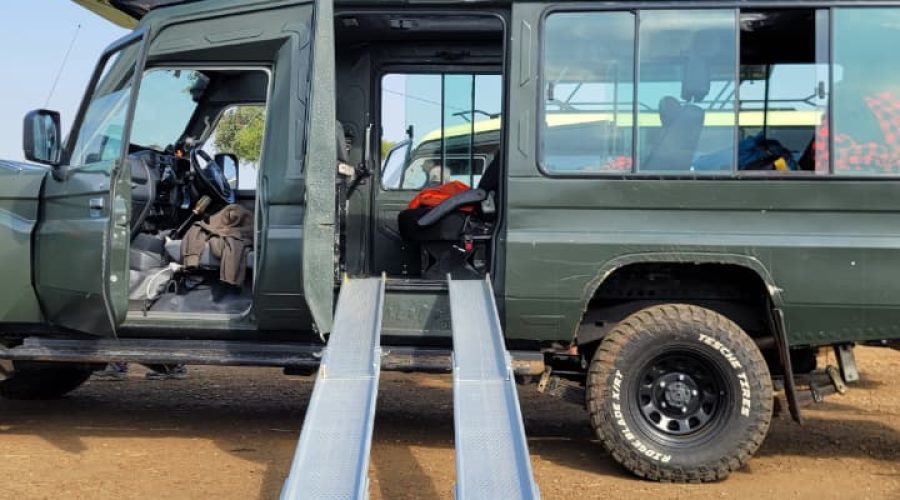
Ask guests specifically about their equipment and accessibility needs before you dispatch a vehicle. A saloon car is useless to someone traveling with a mountain of luggage and mobility equipment. A minivan with a swivel seat doesn’t help a guest who needs a ramp for their powered wheelchair — and vice versa. Getting this wrong isn’t a minor inconvenience; it can mean a guest simply cannot travel.
This is also where minivans often do more work than people expect — they take on more luggage than a saloon can, which is why for airport transfers Accessible Travel Kenya will sometimes dispatch two vehicles (one for the guest and equipment, one for luggage) even when a single vehicle would technically “fit” everything for a city tour later that day.
That distinction matters: capacity, comfort, and practicality are three different things. A vehicle can have the seats and boot space to technically carry everyone and everything, but if the guest is cramped against their luggage or the ramp can’t deploy properly with bags stacked in the way, the trip stops being comfortable or practical — even though it’s still, on paper, within capacity. Always factor in luggage volume and accessibility equipment together, not capacity alone, when deciding what to send.
4. Pace the Itinerary
Accessible travel often means slower travel — and that’s a feature, not a limitation. As a general rule:
- 2 nights minimum in the city on arrival, to recover from the journey before moving on
- 3 nights minimum for any leg reached by road
- 2 nights minimum for any leg reached by flying
Rushing the itinerary to fit more into fewer days almost always costs more in fatigue and complications than it saves in time.
5. Call Before You Travel
Arrange a call with the guest ahead of departure to walk through the details together — the itinerary, the equipment, the accommodations, the transport. It’s a chance to catch anything that’s changed and to give the guest confidence that everything has genuinely been thought through, not just booked.
6. Debrief Your Team and Suppliers
Every driver, front desk agent, and porter involved in the trip should be briefed — not just on logistics, but on etiquette and the guest’s specific profile. How to offer help without assuming it’s needed. How to handle equipment respectfully. What this particular guest prefers. A well-briefed team is often the difference between a guest feeling cared for and a guest feeling handled.
7. Keep a Living Guest Profile
Don’t start from scratch every trip. Build a standing profile for each returning guest — their equipment, their preferences, what’s worked before, what hasn’t. It saves time, prevents repeat mistakes, and shows guests you remember them, not just their booking reference.
8. Verify Accessibility Claims Yourself — Don’t Trust the Listing
“Wheelchair accessible” means wildly different things depending on who’s writing the description. A property might call a room accessible because it has a slightly wider door, while missing a roll-in shower entirely. Before you rely on any accommodation or vehicle for a guest, verify it firsthand — through a site visit, a trusted local contact, or detailed photo and measurement requests. Never book blind on someone else’s definition of “accessible.”
9. Always Have a Backup Plan
Things fail — a vehicle breaks down, a hotel double-books an accessible room, or the hotel doesn’t have a shower seat. Know your backup accessible vehicle, your alternate accommodation, your second supplier, before you need them. In accessible travel, a backup plan isn’t overcautious; it’s the difference between a hiccup and a guest being stranded.
10. If You’re Stuck, Lead With Empathy, Not Sympathy
There will be moments — a delayed flight, a piece of equipment that didn’t arrive, a plan that falls apart mid-trip — where you don’t have an immediate fix. In those moments, resist the urge to over-apologize or treat the guest as someone to be pitied. Sympathy centers your own discomfort with the situation. Empathy centers theirs. Ask what they need right now, listen without assuming, and work the problem alongside them as a capable adult navigating an inconvenience — not a fragile person having something happen to them. It’s a small shift in posture that guests notice immediately.
These lessons keep evolving as Accessible Travel Kenya keeps booking. If there’s one thread running through all of them, it’s this: accessible travel isn’t about ticking a box marked “accessible” — it’s about actually knowing the person you’re planning for, and never assuming someone else’s checklist covers it.
📞 +254 724 215 977 📧 Bookings@accessibletravel.co.ke 🌐 www.accessibletravel.co.ke
Watch: inclusive tourism in practice
See it for yourself on our YouTube channel: Travelling Kenya with a Disability: In Their Own Words · The Captains Behind Every Accessible Trip.


