16 Questions We Actually Get Asked (And Our Answers)
Running an accessible travel company in Kenya means two things. First, you get to watch people see the Mara for the first time. Second, you get asked some truly remarkable questions.
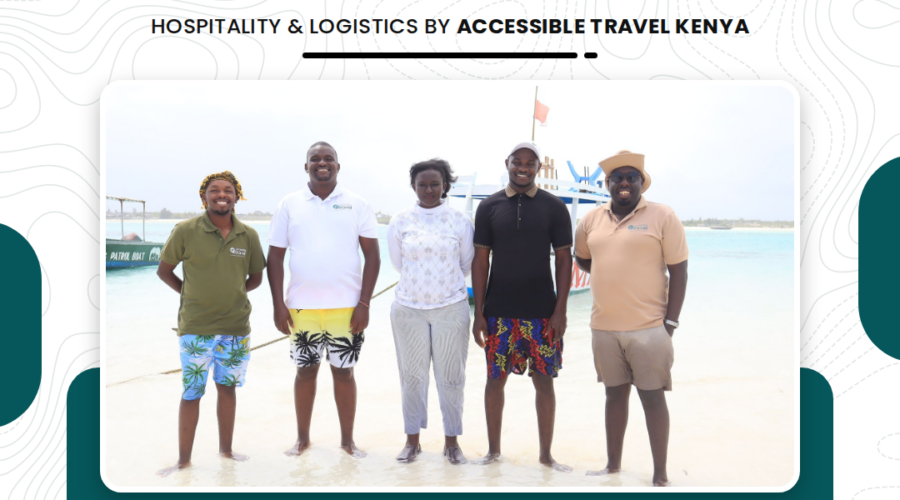
Accessible Travel Kenya has heard them at networking events, in WhatsApp groups, from hotel managers and from the company’s own relatives at Christmas lunch. Rather than keep rolling the company’s eyes privately, the company has collected the 16 most popular ones and answered them properly, in public, with love.
A quick note before the company starts: the joke here is never on travellers with disabilities. It’s on the assumptions. The company’s guests already know the answers. This post is for everyone else.
Part one: “But do they even…?”
1. “Where do you get PWDs?”
This is the company’s all-time favourite. It’s asked the way you’d ask where someone sources their avocados, as if there’s a secret farm in Naivasha.
There isn’t. Travellers with disabilities are your aunt, your former classmate, the accountant down the corridor and the man who beats you at FIFA every Friday. They’ve been here all along. The travel industry just forgot to look up.
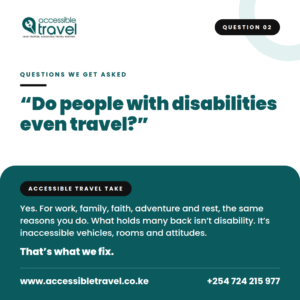
2. “Do people with disabilities even travel?”
Yes, and for the same thrilling reasons you do: weddings you can’t skip, conferences with terrible coffee, and that one cousin’s graduation party that somehow lasts three days.
What stops many people isn’t their disability. It’s the vehicle with three steep steps, the “accessible” room with a bathtub, and the receptionist who suddenly needs to “check with the manager”. Fix those, and suitcases start appearing.
3. “Can a wheelchair user really go on safari?”
Absolutely. The lions have not raised any objections.
With ramp and powerlift vehicles, step-free lodges and guides who check door widths before anyone arrives, the safari is wide open. The wheelchair was never the problem. Bad planning was, and planning is literally the company’s job.
4. “Can a visually impaired person enjoy a game drive?”
Try this: close your eyes on your next game drive. The lion’s roar still rattles your ribs. The rain still smells like rain. And a good guide describes things you would have missed with your eyes wide open.
Travel was never only for the eyes. Ask anyone who’s heard a hippo laugh at 2 a.m.
Part two: questions about “them”
5. “Is this a charity?”
The company checked the company’s bank statements. Definitely not a charity.
The company is a travel business. The company’s guests pay, have opinions about thread counts, and will absolutely tell Accessible Travel Kenya if the breakfast eggs are cold. As they should. Accessibility isn’t a favour. It’s good service.
6. “Who will they travel with?”
Whoever they like. Same as you.
Some guests travel solo. Some bring friends, family or a personal assistant. Some bring a cousin who complains the whole way and still asks to come again next year. Every family has one. It’s their trip, their call. The company plans around the traveller, not for them.
7. “Should I talk to them, or the person with them?”
Picture this: you’re at a restaurant, and the waiter asks your friend what you would like to eat. Annoying, right?
Talk to the traveller. Always. Speak to them directly, make eye contact, and ask before you help. Respect is the first accessibility feature, and it costs nothing.
8. “Won’t they slow down the group?”
Have you ever travelled with a group? Someone always needs the loo, someone always forgot their charger, and someone always wants one more photo with the giraffe.
Good travel isn’t a race. With the right planning, everyone moves at a pace that works, and step-free routes help parents with prams and grandparents with knees just as much.
Part three: questions about the business
9. “Isn’t accessibility just ramps?”
If accessibility were just ramps, this blog would be one sentence long and the company would all be at lunch.
Ramps are a start. Real accessibility is the right vehicle (swivel seat, ramp or powerlift), roll-in showers, booking information that actually tells you the truth, and staff who know what they’re doing. It’s the whole journey, from your first email to the drop-off at your gate.
10. “Is there really a market for this?”
About 1 in 6 people worldwide lives with a disability, according to the World Health Organization. That’s more than a billion potential travellers, and most of them don’t travel alone.
So yes, there’s a market. It’s just been sitting in the lobby, waiting for someone to notice it couldn’t get up the front steps.
11. “Can a deaf person go on safari?”
Yes. The elephants were never going to give a safety briefing anyway.
The company pairs the driver-guide with a sign language interpreter from the company’s team, so nobody misses a story, a sighting or the very important bit about staying inside the vehicle.
12. “Do you charge more if I have a disability?”
Let’s do the maths together. A 2000cc minivan drinks the same fuel whoever is sitting in it. The driver earns the same wage. KRA collects the same duty and taxes, with equal enthusiasm.
So the rate is the same for everyone: local or foreign, with or without an accessibility need. One fair price. No “special” surcharge.
Part four: questions about Accessible Travel Kenya
13. “Isn’t disability work really hard?”
Usually asked with a sympathetic head tilt, the kind people save for funerals.
Honestly? It’s no harder than any good service. The company’s guests aren’t “hard work”. They’re travellers with clear needs. Get the vehicle, the room and the route right, and it’s travel like any other. What’s hard is the barriers, not the people.
14. “Is disability inclusion part of your CSR?”
This one usually comes from a business, holding a cheque and a camera.
No, and it shouldn’t be part of yours either. Travellers with disabilities are customers, not beneficiaries. They choose, they pay, and they leave reviews. Inclusion isn’t a donation. It’s how you do business.
15. “This is expensive.”
Not technically a question, but the company will allow it.
Tell Accessible Travel Kenya your budget and the company will find the best deal within it, then walk you through every option. Weekend getaway or two-week safari, guesthouse or luxury lodge, there’s a great trip at every price.
16. “Is your team trained?”
Yes, and not just in the art of answering the 15 questions above with a straight face.
The company’s team is certified in Basic Life Support (BLS) and first aid, disability etiquette and sign language. So every transfer, every ride and every conversation is handled with skill and respect.
Got a question Accessible Travel Kenya missed?
The company genuinelies love these questions. Every one of them is a chance to change how someone thinks about travel, and every answer brings Kenya a little closer to being a destination for everyone.
So keep them coming. Ask Accessible Travel Kenya the awkward ones. Ask Accessible Travel Kenya the ones you were too shy to ask at the networking event. And if you or someone you love is ready to travel, let’s start planning.
Phone: +254724215977
Email: bookings@accessibletravel.co.ke
Web: www.accessibletravel.co.ke
Accessible Travel: your trusted, accessible travel partner.
