Equipment Details
-
SizeStandard
-
Width22" to 24"
-
Capacityup to 160kg
-
Ability to FoldYes
-
Ability to Disassemble the ChairNo
-
Turning Radius36"
-
Overall Length46"
-
Overall Width of Base21"
-
Weight of Unit40kg
-
Seat TypeCompact, Foldable (17" x 17")
-
Seat-to-Ground Height Range20.5" - 22"
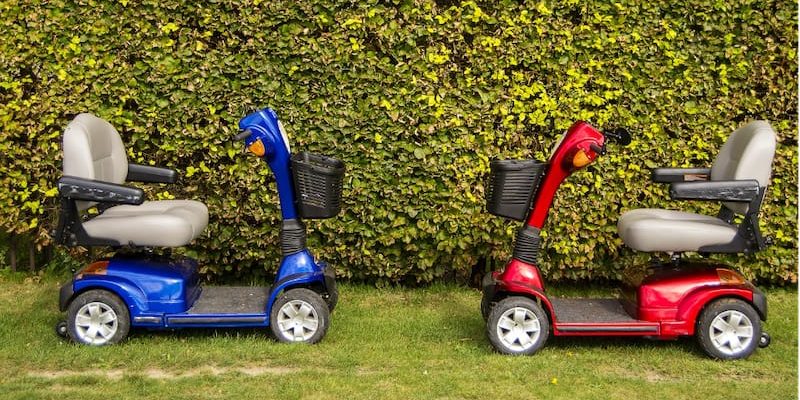
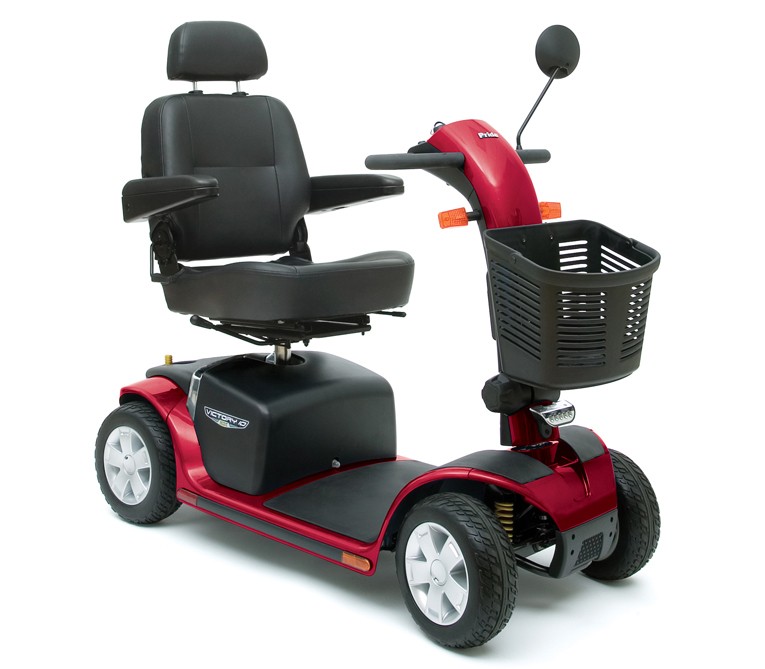
As its name suggests, these scooters are easily transportable and can either disassemble or collapse to fit into the trunk of most medium to full sized cars. This feature allows you ease of travel and taking your scooter from place to place will be a breeze. The heaviest piece when disassembled typically weighs between 40-60 lbs, making transportable scooters a very manageable option.
Features
FAQ
What is the difference between a transport chair and wheelchair?
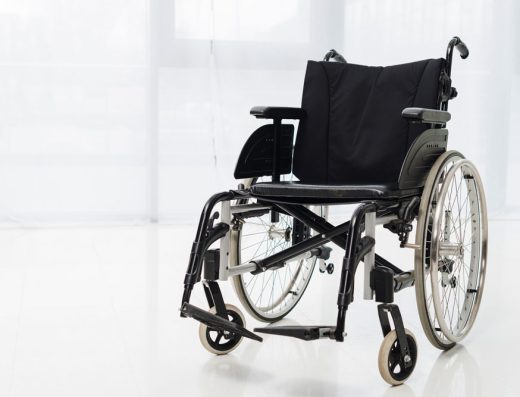
Wheelchairs are made for people who can self-propel themselves using their arms. Conversely, a traditional, non-electric transport wheelchair usually requires the person be pushed around by a companion or caregiver. They are often used in hospitals and airports and are ideal for people who don’t have the ability to operate a standard wheelchair. However, even if you can push yourself around, a transport wheelchair can still be a great investment. Since transport chairs are generally lighter, more compact, and often foldable, they are an excellent choice for people with limited mobility who love to travel. The easier it is to get your chair onto a bus, plane, train, or boat, the more fun you'll have when adventuring!
How much does a transport wheelchair weigh?
Transport wheelchairs come in various weights and sizes. The best option for you depends on several factors, including your own weight, how frequently you’ll need to lift the chair, and how many features you'd like the chair to have. An ultra-lightweight wheelchair might weigh 19 pounds or less, yet still be able to support a person who weighs 300 pounds. Models like this – along with lightweight folding wheelchairs – tend to be a little more minimalist. It’s important to remember that the more frills a transportable wheelchair has, the more it is likely to weigh. While lightweight transport wheelchairs are typically defined as weighing 25 pounds or less, transport chairs that weigh 35 pounds or more do exist. However, these models tend to look almost like standard wheelchairs.
What is the lightest transport wheelchair?
Any unit weighing less than 19 pounds is considered an ultralight transport wheelchair, and some of these chairs can be made even lighter if you choose to forgo the optional footrests. You'll only ever find manual transport chairs available at this weight. But what is the absolute lightest manual transport chair? Currently, the lightest on the market is the Medline Ultralight Transport Chair, which comes in at under 15 pounds
What is the width of a transport wheelchair?
Because they have smaller wheels and less add-ons, transport wheelchairs are almost always narrower than traditional wheelchairs. Transport chairs can be quite thin and are normally only a couple inches wider than their seat cushion size. Standard manual wheelchairs, on the other hand, are typically around 8 inches wider than their seat cushion size due to their large wheels. The narrower transport chair models tend to be around 21 inches wide.
Can transport wheelchairs go through bathroom doors?
Yes, absolutely – transport chairs can scoot through many doors that average wheelchairs can't. Even in the oldest houses, bathroom doorways are rarely less than 23 inches wide. While some doors can fall into the 23 to 27 inch range, it’s more common for bathroom doors nowadays to meet the ADA-accessible standard of 32 inches wide. This is good news for people with limited mobility who love to travel, as transport chairs will have no problem whatsoever fitting into an ADA-approved bathroom.
How important are handbrakes on a transport wheelchair?
Different transport chairs can have different braking systems. Many have brakes located on the rear wheels, while other chairs feature handbrakes similar to bicycles. Some models may even have both! Handbrakes are located on the handlebars and are operated by the person who is pushing the chair, while back-wheel brakes are typically accessible to both the person sitting in the chair and a companion. A combination of handbrakes and rear-wheel brakes can be beneficial, especially if the chair will be pushed over uneven terrain or up and down hills. Handbrakes can also help increase safety and are a good option if the occupant of the transport chair is on the heavier side. Ultimately, however, it depends on how you're going to use the unit. If you plan to use the chair on a daily basis or take it exploring with you, we recommend adding handbrakes to the list of features you're looking for.
How to choose a transport wheelchair ?
f you're unsure which transport wheelchair is right for you, it’s best to browse multiple options and find one that falls most in line with your needs. It's easy to be swayed by the cool features on some of the transport wheelchairs out there – that's why we recommend that before you start researching, you make a list of what features and specifications are most important to you. Do you always search for the lowest price, or does comfort matter more? Where will you store the chair and how large is that area? Who, if anyone, will be assembling and disassembling the chair? Is the chair's weight important? How often do you plan on using the transport chair? Will it mostly be used for vacations and travel or simple, everyday outings? Would it make your life easier if you had a chair that folded up? Who would be responsible for folding it? How much control would you like to have, and building off of that, is a user-operated handbrake important to you?